 DeepCurrent

Know exactly where you rank. Not just that you're "on Google."
Five scores that grade the site itself, a map of which streets you win and which belong to a competitor, and a record of what ChatGPT, Claude and Gemini actually say when someone asks for your trade nearby.
No "guaranteed #1." Nobody controls Google that completely — we show you the real number instead.
Measured weekly
Five scores, weighted by how much each one actually matters.
Three are yours to fix by editing the site. Two are the outside world's opinion of the business, and they take longer to move.
- 25%
Technical health
Loads fast, works on a phone, gives search engines nothing to trip over. Usually fixed in one visit.
- 25%
On-page SEO
Whether the titles, headings and page structure actually say what the business does and where. Edited, not earned.
- 25%
Keyword visibility
Where the site lands when someone searches the things customers actually search. Tracked every week.
- 15%
Backlink profile
Who else on the internet links to the site. Earned off-site, over time — no page edit moves this one.
- 10%
Content quality
Whether the pages answer what a customer would actually ask, in enough depth to be worth ranking.
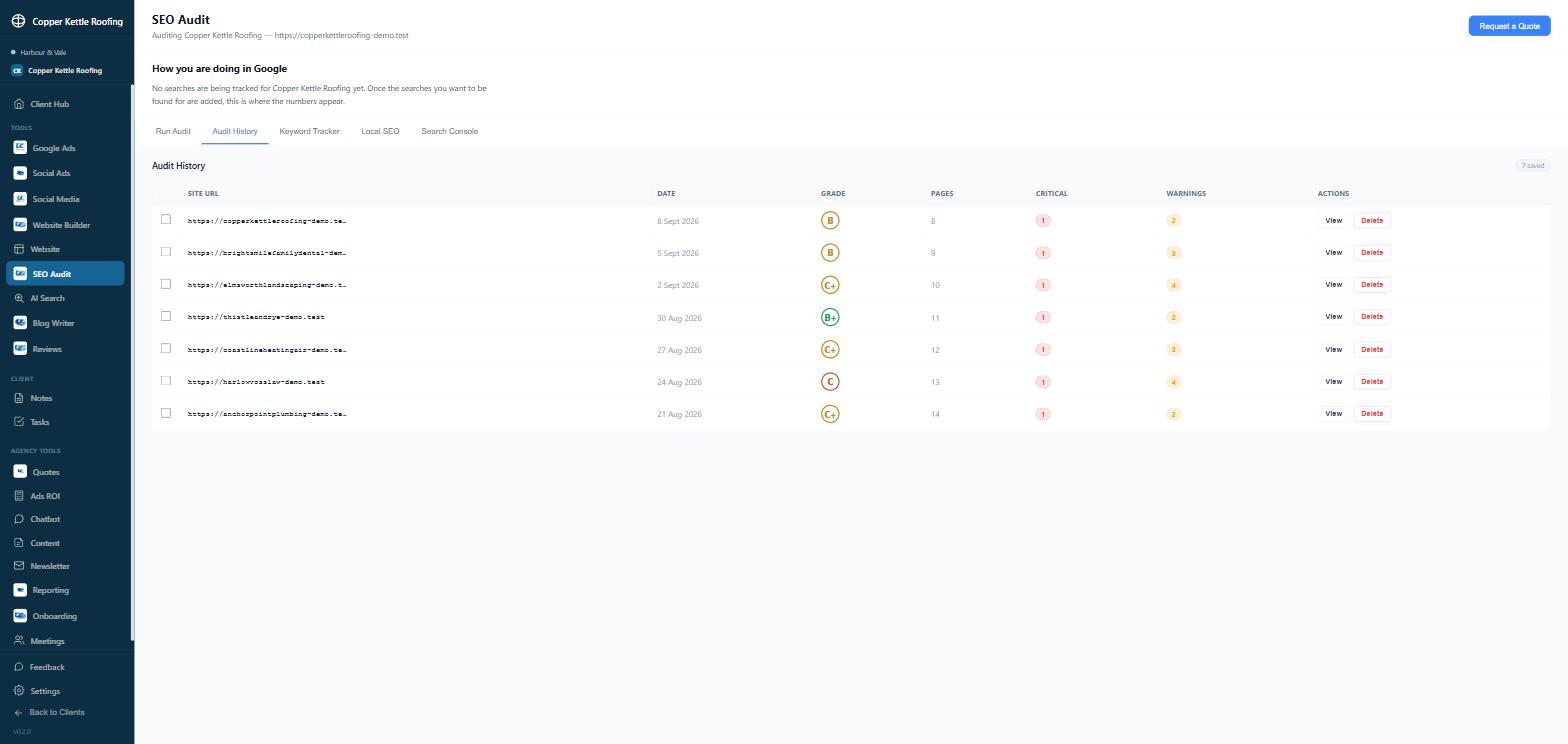
A gut feeling isn't a score. Each of these five is measured on the same schedule, so a change you make on Tuesday shows up as a number moving, not a guess about whether it helped.
Local search
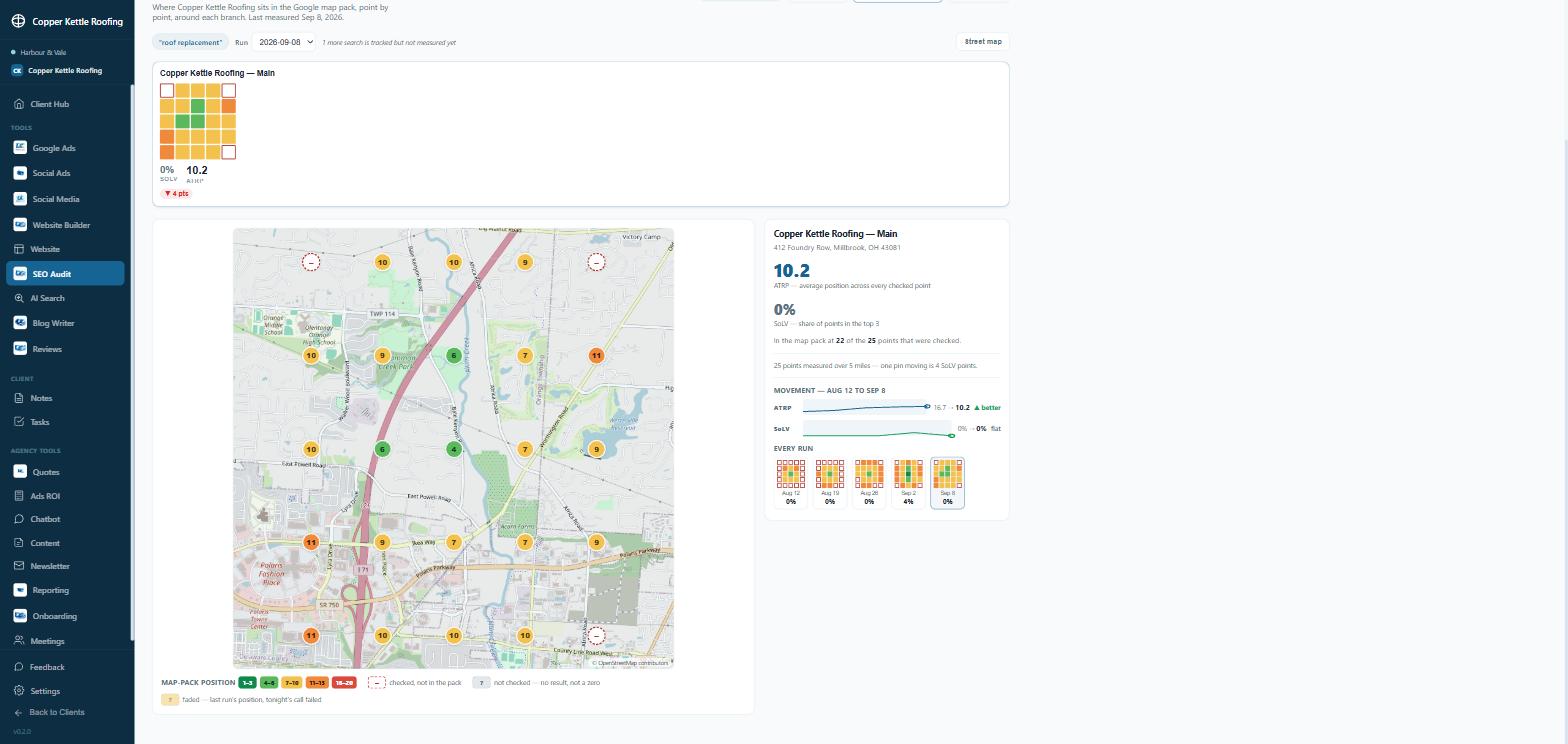
A map of where you win, street by street.
"Ranked well locally" can mean first place two streets away and nowhere on the map ten minutes out. One averaged number hides that difference completely.
The grid checks a spread of points around the business address and shows exactly which ones you're winning — and which ones belong to a named competitor right now. Scroll, and the points resolve outward from the front door.
- Top 3 — in the map pack
- 4 to 10 — page one
- 11 and beyond
Resolved 25/25 Top 3 at 8 Average 6.2 Demo business
What runs in the background
Checked on a schedule, not once and forgotten.
- 1
Rankings tracked every week
The keywords that matter to the business, checked on the same schedule every time — so a change shows up as a trend, not a one-off snapshot.
- 2
The AI assistants, asked cold
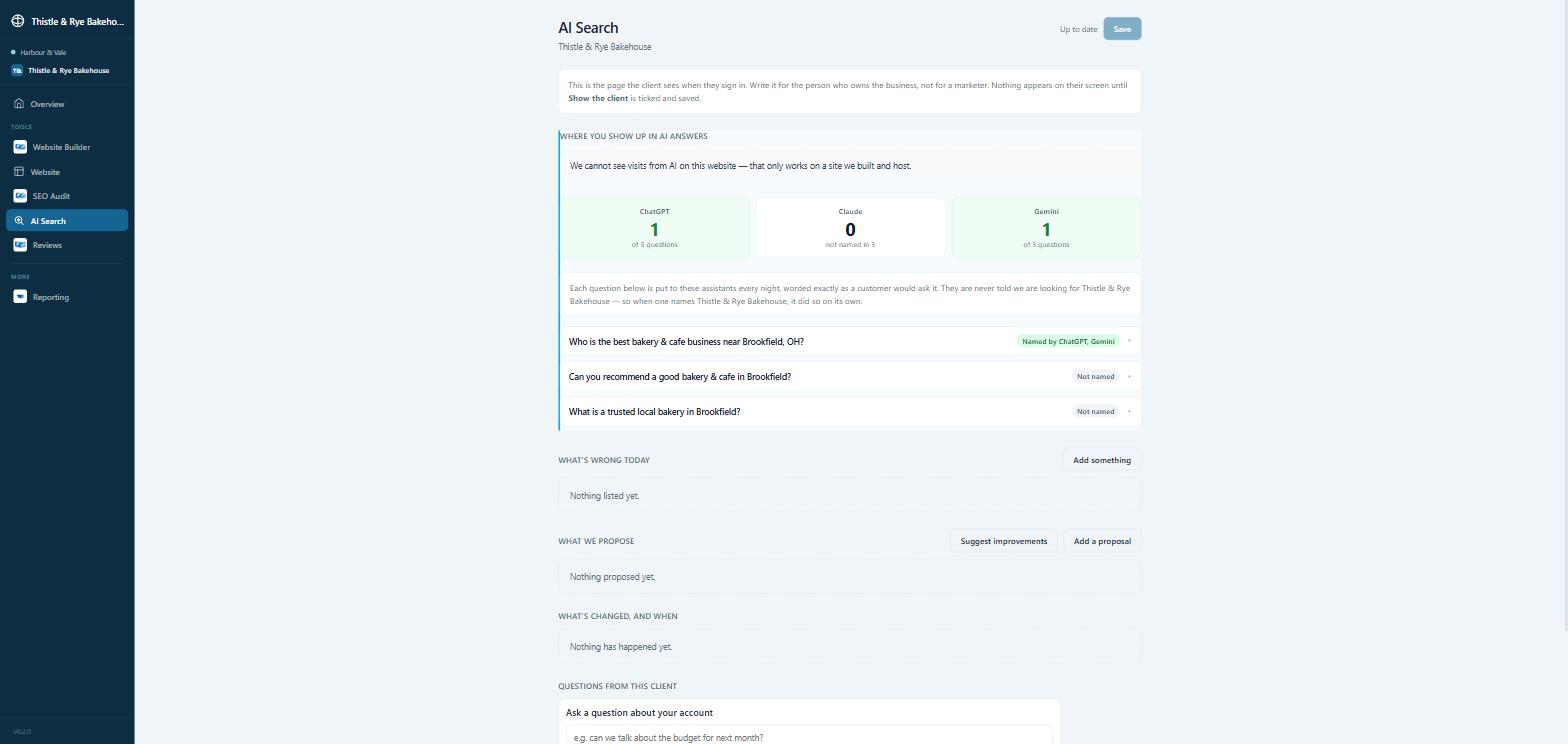
Every night, the question a real customer would ask — "who does custom cakes near me" — goes to ChatGPT, Claude and Gemini with no hint which business we're hoping to hear back.
- 3
One page, once a month
Not a 40-page PDF nobody opens. The scores, the map, what the assistants said, and the single thing worth doing next.
Week 12/12 Avg position 6.6 In the top 10 4/5
Demo keywords for an invented roofer, over twelve tracked weeks. This shows how movement is reported — it is not a promise of it. One of the five never made page one, which is honest too.
Plainly
We'll never promise a ranking.
No "guaranteed #1," no set number of leads. Nobody controls Google or an AI model that completely. What we can do is measure exactly where the business stands, every week, and be straight about it.
Getting found is part of Site + Found and Everything.
Compare the plans and see exactly what's tracked at each level.